
Key takeaways
- Your oil acts only as a carrier — XADO says it does not change viscosity.
- Heat and friction at worn spots activate the revitalizant.
- Metal carbides and recycled worn-off metal particles form a ceramic-metal (cermet) layer.
- XADO rates the layer at 650–750 kg/mm² micro-hardness with surface roughness down to Ra 0.06 µm.
- Use it as protection and wear restoration — not as a fix for broken parts.
Why engines wear out
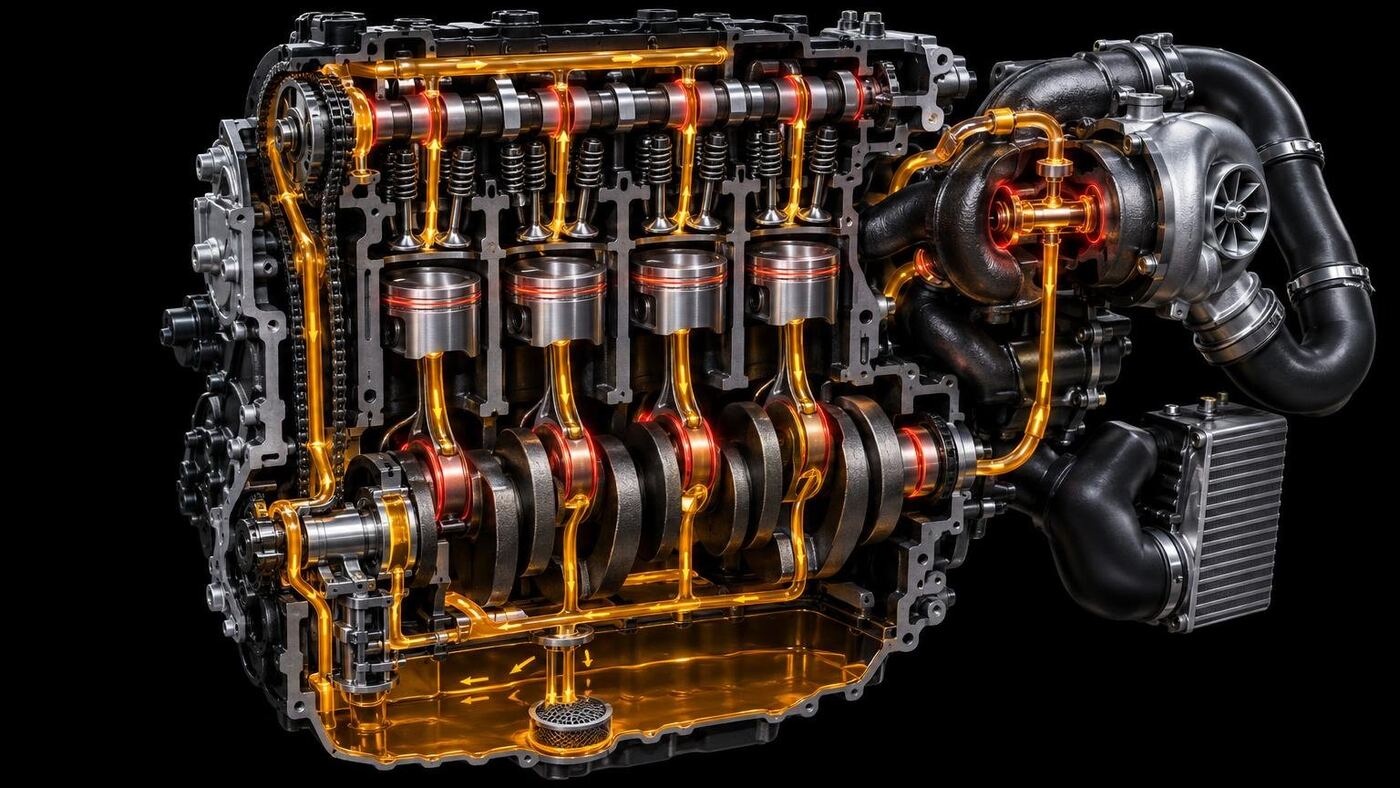
Under load, metal surfaces rub against each other thousands of times a minute. Atoms — and under extreme load, whole clusters of atoms — tear away from cylinder walls, rings, bearings and cams and end up suspended in your oil. According to XADO, used oil can contain up to 3 grams of metal, and the loss of around 60 grams of friction surface is enough to make an engine unfit for further use.
The symptoms are familiar to any Singapore workshop: lower compression, more noise, rising fuel consumption, oil burning and higher CO/HC emissions at inspection.
The 1 Stage revitalization process
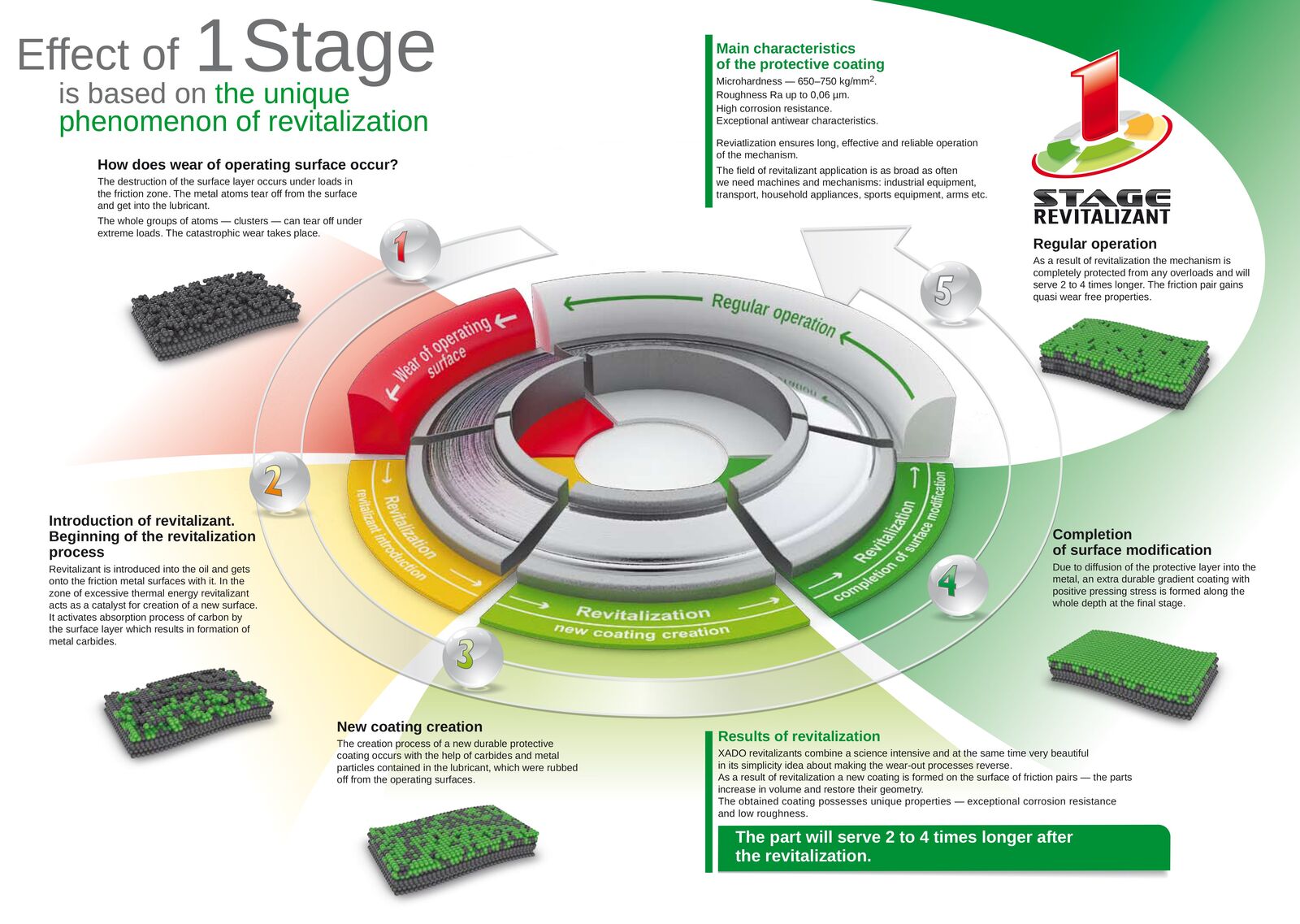
- Wear of the operating surface. Metal atoms tear off under load and float in the oil.
- Introduction of revitalizant. Added to the oil, it reaches the friction zones. Where thermal energy is highest — i.e. where wear is worst — it acts as a catalyst, cleaning non-metallic deposits and starting carbon absorption into the surface, forming metal carbides.
- New coating creation. Carbides bond with the worn-off metal particles in the oil and build them back into the surface.
- Completion of surface modification. The layer diffuses into the base metal, creating a durable gradient coating with positive compressive stress.
- Regular operation. XADO states the part is now protected against overloads and can serve 2 to 4 times longer.
XADO describes the finished cermet as “a smooth glassy surface” — a metal strengthened by carbides with carbon content peaking at the surface, giving a diamond-like film on top of a relatively flexible base. The company claims it is several times harder than the original steel and cuts the friction coefficient dramatically.
Want this inside your engine? Any of Singapore's 11 authorised XADO workshops can add it at your next servicing.
Find a workshopThe lab test: “metal can be healed”
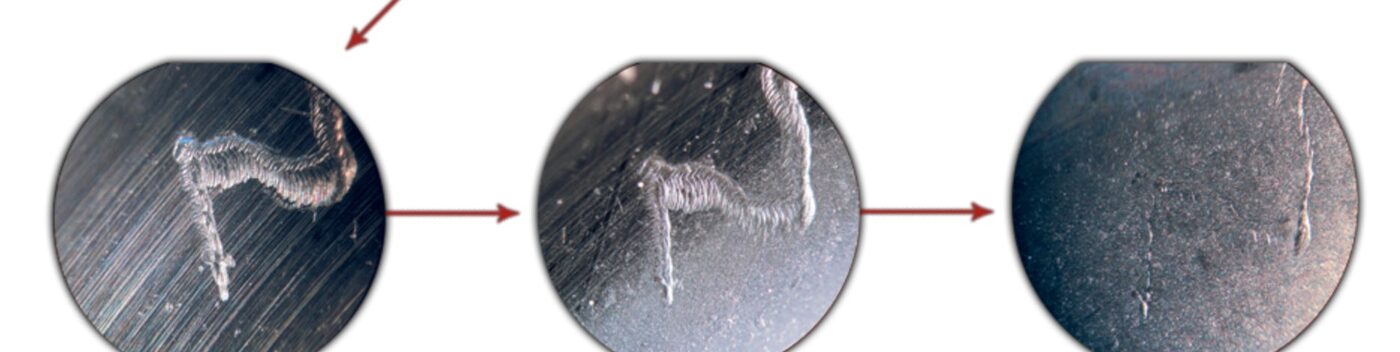
To show the process, XADO's tribology lab engraved a defect into a bearing race — far deeper than normal wear — applied 0.5 ml of a revitalizant grease and ran the bearing at 8,000 N and 1,000 rpm. After 15 minutes the scratch was visibly rebuilding; after an hour it could barely be seen.
Watch: what is revitalizant?
What makes Twin Turbo different: the 4C formula
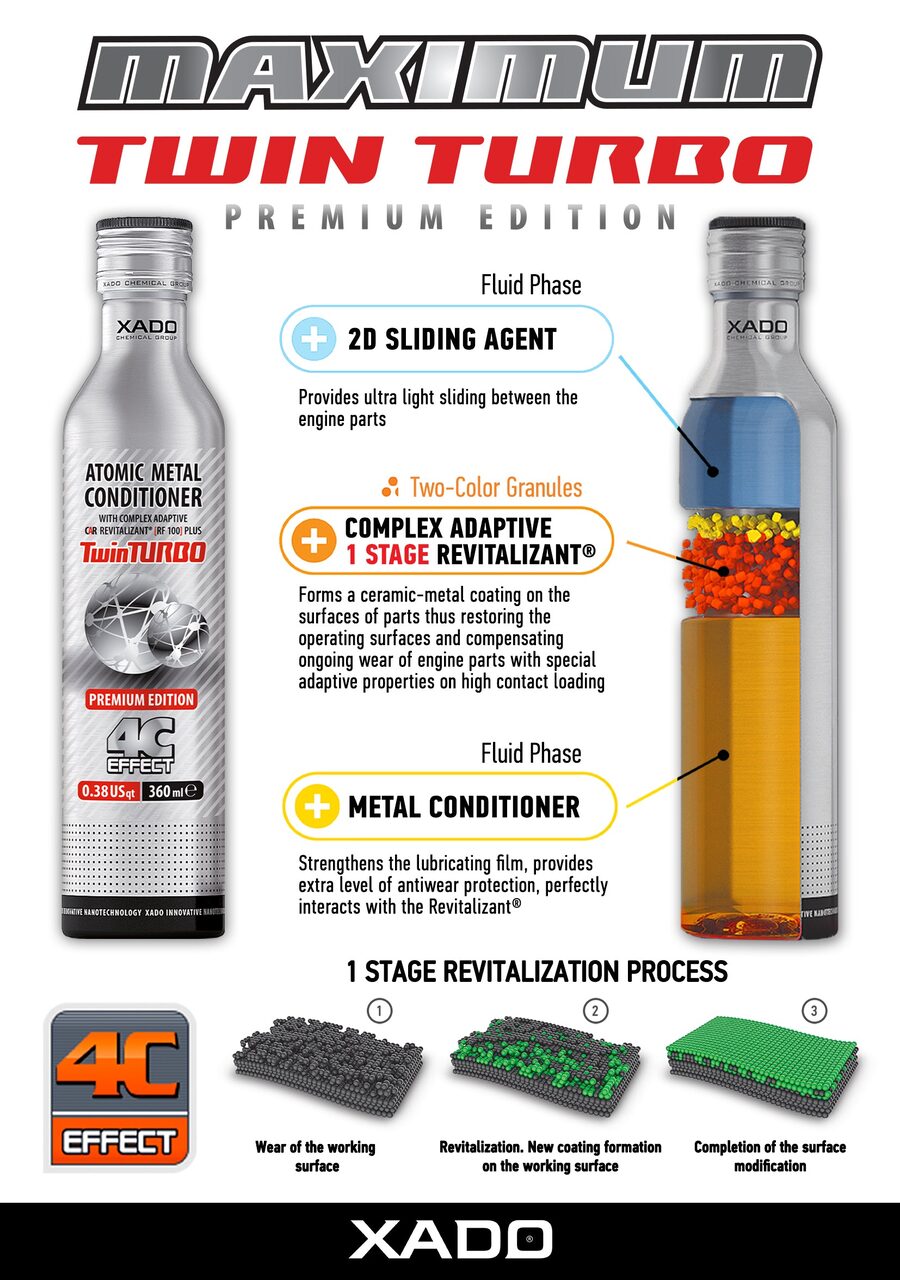
XADO's newest engine treatment combines three working phases in one bottle:
- 2D sliding agent — an ultra-light sliding layer between moving parts.
- Complex Adaptive 1 Stage Revitalizant® — two-colour granules that build the ceramic-metal coating and adapt to high contact loads. XADO says it can heal friction-surface damage up to 0.2 mm deep.
- Metal conditioner — strengthens the oil film for an extra level of anti-wear protection.
That combination targets exactly what small turbocharged engines — the kind many Cat A and Cat B cars now use — need: protection at high temperature and high specific power.
Honest limits
XADO is a treatment for wear, not a miracle cure. It will not rebuild a broken piston ring, fix a cracked head or stop a leaking gasket. That's why the best results come from a workshop that inspects your car first and recommends the right product — or tells you when a repair is needed instead.
FAQs
How long does XADO take to work?
XADO describes revitalization as a gradual process that is activated by the heat and friction of normal driving, so the protective layer builds up progressively after treatment. Your workshop can advise what to expect for your engine and when to re-check it.
Is the ceramic-metal layer permanent?
XADO describes the cermet layer as durable and self-regulating: it forms where wear occurs and stops growing once surface geometry is restored. Continued protection comes from re-treating periodically or using XADO oil with revitalizant blended in.
Is XADO safe for catalytic converters and turbochargers?
XADO's LX AMC Black Edition oils are mid-SAPS formulations designed to protect catalytic converters and particulate filters, and the Twin Turbo conditioner is formulated for turbocharged engines. Always follow your workshop's advice for your specific engine.
Can XADO be used on hybrid cars?
Hybrids still have a petrol engine that suffers frequent stop-start cycles. Ask an authorised workshop which XADO product suits your hybrid's oil specification.
What does XADO not do?
It does not repair cracked, broken or seized parts, fix leaking seals or replace overdue maintenance. It is a wear-protection and surface-restoration treatment.